2 performances
25-26.04.2026
25.04 - 14:00 |
26.04 - 14:00 |
Genève
Maison Saint-Gervais
Past
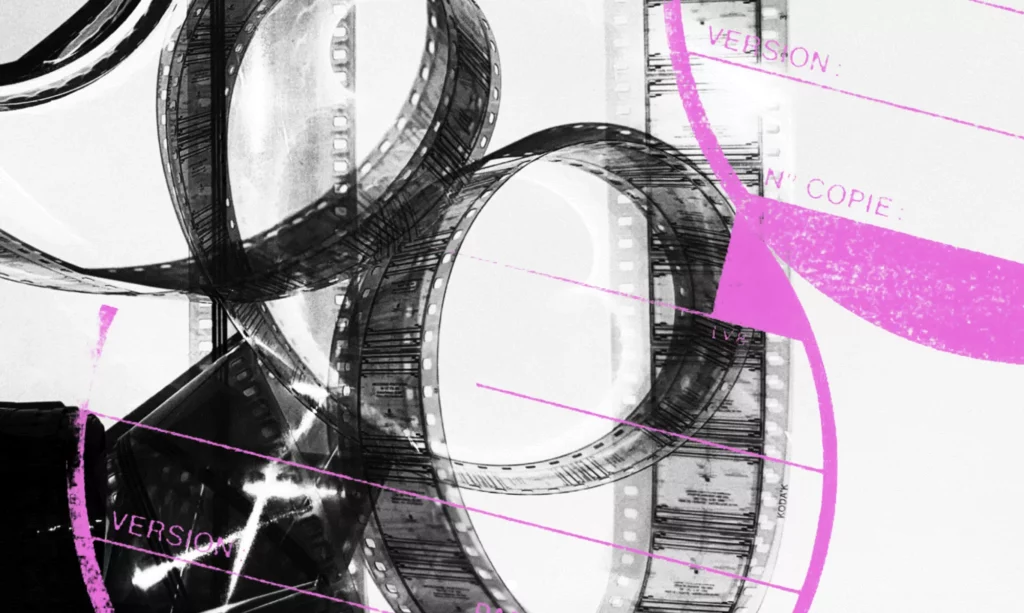
In collaboration with Maison Saint-Gervais, the weekend of April 25 and 26, 2026, will be an opportunity to (re)discover the joy of 35mm film screenings.
On the program are six films that explore and showcase dance—six feature-length films spanning the history of world cinema, from Bollywood to Denmark’s Dogme 95, including American documentaries and the French New Wave. A weekend celebrating the enduring romance between these two arts: cinema and dance.
One of the few venues in Geneva still equipped with the technical means to screen 35mm films, the Maison Saint-Gervais loves to immerse itself once again in this unique sound and image, all enveloped by the hum of the projector.
One of the few venues in Geneva still equipped with the technical means to screen 35mm films, the Maison Saint-Gervais loves to immerse itself once again in this unique sound and image, all enveloped by the hum of the projector.
In collaboration with Maison Saint-Gervais
Free admission (reservations recommended)
Saturday:
2:00 PM–4:39 PM
La Danse (159 min)
5:30 PM–7:30 PM
Iberia (120 min)
8:00 PM–9:37 PM
Bande à part (97 min)
Sunday:
2:00 PM–5:04 PM
Kal Ho Naa Ho (184 min)
6:00 PM–7:29 PM
Heavenly Bodies (89 min)
8:00 PM–10:20 PM
Dancer in the Dark (140 min)
A documentary about seven ballet rehearsals at the Paris Opera.
Frederick Wiseman, the American filmmaker who passed away on February 16, revolutionized documentary filmmaking. Without didactic effects (he does not use voice-over, for example), his productions immerse us, through their length and perspective, as deeply as possible in the worlds he films. *LA DANSE* is part of his series of projects set in a cultural venue—and the work carried out there—allowing the viewer to soak up the atmosphere of the place. Wiseman dissects his subject to extract its very essence, delivering iconic scenes—whether danced or spoken—that, taken together, like a ballet, strip away the superfluous to retain only the essential.
Frederick Wiseman, the American filmmaker who passed away on February 16, revolutionized documentary filmmaking. Without didactic effects (he does not use voice-over, for example), his productions immerse us, through their length and perspective, as deeply as possible in the worlds he films. *LA DANSE* is part of his series of projects set in a cultural venue—and the work carried out there—allowing the viewer to soak up the atmosphere of the place. Wiseman dissects his subject to extract its very essence, delivering iconic scenes—whether danced or spoken—that, taken together, like a ballet, strip away the superfluous to retain only the essential.
A series of dance performances celebrating the 100th anniversary of the premiere of composer Isaac Albéniz’s suite Iberia.
Carlos Saura, in addition to his superb dramas, has regularly turned his attention to dance films. After several works devoted to flamenco, he delivers a production entirely dedicated to a single classical piece of Iberian music (as its name suggests), a tribute to Andalusia. What is most remarkable is that this is a true cinematic project and not a mere staging of a theatrical performance. One senses the filmmaker’s genuine love for his culture and his joy in sharing it. Saura is, in fact, the most brilliant witness to Spain’s cultural, political, and social evolution from the 1950s to 2020. With IBERIA, he offers a sort of “best-of” of his art.
Carlos Saura, in addition to his superb dramas, has regularly turned his attention to dance films. After several works devoted to flamenco, he delivers a production entirely dedicated to a single classical piece of Iberian music (as its name suggests), a tribute to Andalusia. What is most remarkable is that this is a true cinematic project and not a mere staging of a theatrical performance. One senses the filmmaker’s genuine love for his culture and his joy in sharing it. Saura is, in fact, the most brilliant witness to Spain’s cultural, political, and social evolution from the 1950s to 2020. With IBERIA, he offers a sort of “best-of” of his art.
Two thugs who are fans of film noir want to get up to all sorts of mischief, and their encounter with a young girl allows them to act on their desires.
Jean-Luc Godard, like most of his New Wave colleagues, loves American film noir. A tribute, in both substance and form (low budget), to this cinematic style, Bande à part, inspired by a very good novel by Dolores Hitchens, allows him to take stock of the presence of this culture in France. Is it the influence of American film clichés or, simply, the desire for freedom characteristic of the era that drives his protagonists? In any case, if BANDE À PART deserves its place in a series dedicated to dance, it is precisely because it contains one of the best scenes of its kind—often imitated but never equaled.
Jean-Luc Godard, like most of his New Wave colleagues, loves American film noir. A tribute, in both substance and form (low budget), to this cinematic style, Bande à part, inspired by a very good novel by Dolores Hitchens, allows him to take stock of the presence of this culture in France. Is it the influence of American film clichés or, simply, the desire for freedom characteristic of the era that drives his protagonists? In any case, if BANDE À PART deserves its place in a series dedicated to dance, it is precisely because it contains one of the best scenes of its kind—often imitated but never equaled.
An Indian family struggles to make ends meet in New York until a new neighbor moves in and becomes their guardian angel.
The early 2000s saw the emergence of Indian films that harked back to the spirit of classic Bollywood. Among them, KAL HO NAA HO cemented the fame of actor Shahrukh Khan, who single-handedly symbolizes this return to quality. Indian cinema of those years plays with its own clichés and transforms a vintage melodrama into a universal comedy-drama. Moving effortlessly between laughter and tears, the film easily rivals the best musicals of Minnelli or Demy. Fans of kitsch may be disappointed, but lovers of poignant comedy-dramas will be in heaven.
The early 2000s saw the emergence of Indian films that harked back to the spirit of classic Bollywood. Among them, KAL HO NAA HO cemented the fame of actor Shahrukh Khan, who single-handedly symbolizes this return to quality. Indian cinema of those years plays with its own clichés and transforms a vintage melodrama into a universal comedy-drama. Moving effortlessly between laughter and tears, the film easily rivals the best musicals of Minnelli or Demy. Fans of kitsch may be disappointed, but lovers of poignant comedy-dramas will be in heaven.
The owner of an aerobics club must compete against a rival by organizing a dance marathon.
A Canadian answer to FLASHDANCE, HEAVENLY BODIES is one of the cult aerobics films of the 1980s. The Maison Saint-Gervais Film Club thus continues its exploration of this subgenre (following last year’s screening of PERFECT), which is anything but melancholic. In addition to lead actress Cynthia Dale’s commitment to a role as physically demanding as those of the macho men of that era (Stallone, Schwarzenegger, etc.), HAEVENLY BODIES is above all a fast-paced film that never lets up. A true action film in the literal sense of the word, even with its often simplistic and disjointed plot—despite itself.
A Canadian answer to FLASHDANCE, HEAVENLY BODIES is one of the cult aerobics films of the 1980s. The Maison Saint-Gervais Film Club thus continues its exploration of this subgenre (following last year’s screening of PERFECT), which is anything but melancholic. In addition to lead actress Cynthia Dale’s commitment to a role as physically demanding as those of the macho men of that era (Stallone, Schwarzenegger, etc.), HAEVENLY BODIES is above all a fast-paced film that never lets up. A true action film in the literal sense of the word, even with its often simplistic and disjointed plot—despite itself.
In the 1960s, in the heart of a small American town, Selma works in a steel mill to earn enough money to pay for her son’s eye surgery and prevent him from going blind.
It must be acknowledged that among Lars von Trier’s various ambitions to shake up cinematic conventions, his revolution of the melodrama is a success. Four years after the stunning *Breaking the Waves*, *Dancer in the Dark* once again transcends the conventions of the genre. Returning to the essentials of cinema (through imagery, acting, editing, and sound), von Trier strips his film down to the bare minimum to amplify every emotion. But this time, unlike his previous films, which he dominated with his auteurism, he opens up to the world of singer Björk. Without her, of course, the film would not have been so simply beautiful and so brilliantly musical.
It must be acknowledged that among Lars von Trier’s various ambitions to shake up cinematic conventions, his revolution of the melodrama is a success. Four years after the stunning *Breaking the Waves*, *Dancer in the Dark* once again transcends the conventions of the genre. Returning to the essentials of cinema (through imagery, acting, editing, and sound), von Trier strips his film down to the bare minimum to amplify every emotion. But this time, unlike his previous films, which he dominated with his auteurism, he opens up to the world of singer Björk. Without her, of course, the film would not have been so simply beautiful and so brilliantly musical.
Drinks and snacks
| Free (reservation required) | Gratuit |

1/6

2/6

3/6

4/6

5/6

6/6